The Photography of Milt Hinton
Photo copyright Robert Appleton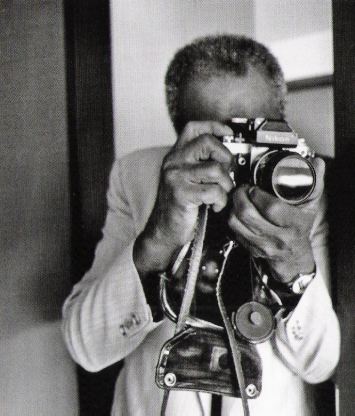 Milt Hinton, Hartford, Connecticut, 1990_____
The black-and-white photographs taken by Milt Hinton between 1935 and 1999 comprise the major part of the Milton J. Hinton Photographic Collection, which is housed in New York City. The collection, co-directed by David G. Berger and Holly Maxson, contains approximately sixty thousand 35 mm negatives, thousands of reference and exhibition-quality prints, and photographs given to collected by Milt throughout his life.
Photographs from the collection have appeared in books, periodicals, newpapers, jazz calendars, postcards, CD art, films, in videos, and on the Internet.
The collection has curated exhibition at venues ranging from neighborhood community centers to museums, including the Corcoran Gallery of Art, the Denver Art Museum, and the Smithsonian Institution.
Until Milt's death in 2000, the management of the collection -- selecting negatives for reference and exhibition prints, monitoring print quality, and choosing exhibition sites -- involved a close collaborative effort between Milt, David, and Holly. In their continuing administration of the collection, David and Holly are always mindful of Milt's point of view as a documentarian, his aesthetic, and his "voice."
Milt was never a professional photographer, and he readily acknowledged that many of his pictures are of dubious quality. He rarely used a flash in low-light situations, and to be less obtrusive, he often preset the camera's focus so he could literally shoot from the hip. Many rolls of film remained undeveloped for twenty years, and because Milt was seldom in the darkroom, at times he inadvertently used stale chemicals to process his film. Negatives remained paper-clipped to contact sheets for years, which resulted in rust problems, and several basement floods caused many to adhere to one another and to their paper sleeves.
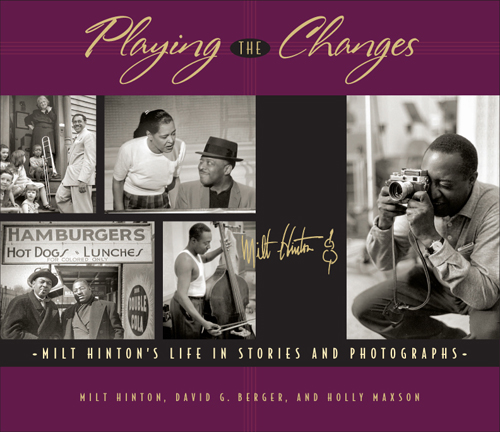
A current and major goal of the collection is to complete a database of Milt's photographs. This on-going project, begun in the late 1990s, in recent years has benefited from advances in digital photography. Scanning has become faster and more accurate, and digital storage is less expensive. Computer software allows a trained user to restore a damaged negative or print and to retrieve elusive details from poor-quality images while maintaining the integrity of the photographs. The success of digital processing is clearly visible in the 2002 Berger and Maxson documentary film, Keeping Time: The Life, Music & Photographs of Milt Hinton, and in some of the photographs that appear in their book Playing the Changes: Milt Hinton's Life in Stories and Photographs as well.
- From Playing the Changes: Milt Hinton's Life in Stories and Photographs, by Milt Hinton, David G. Berger, and Holly Maxson
 Dizzy Gillespie and Charles Mingus backstage at the Newport Jazz Festival 1971
 Quincy Jones, recording studio, NYC c. 1957
 Jimmy Rushing
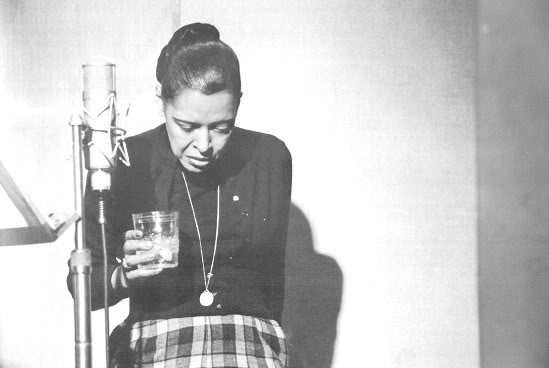 Billie Holiday
Recording studio, New York City, circa 1958
Billie Holiday
Recording studio, New York City, circa 1958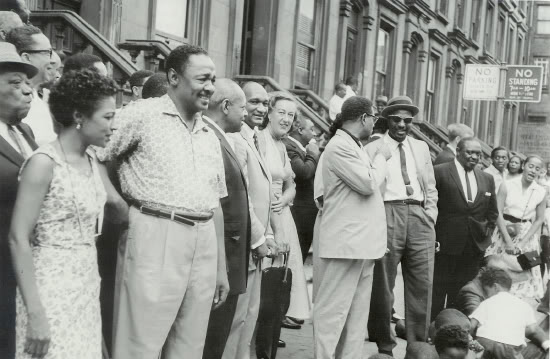 Jimmy Rushing, Scoville Browne, Maxine Sullivan, Joe Thomas, Coleman Hawkins, Oscar Pettiford, Marian McPartland, Emmett Berry, Sahib Shihab, Thelonious Monk and Rex Stewart
(Harlem; August, 1958)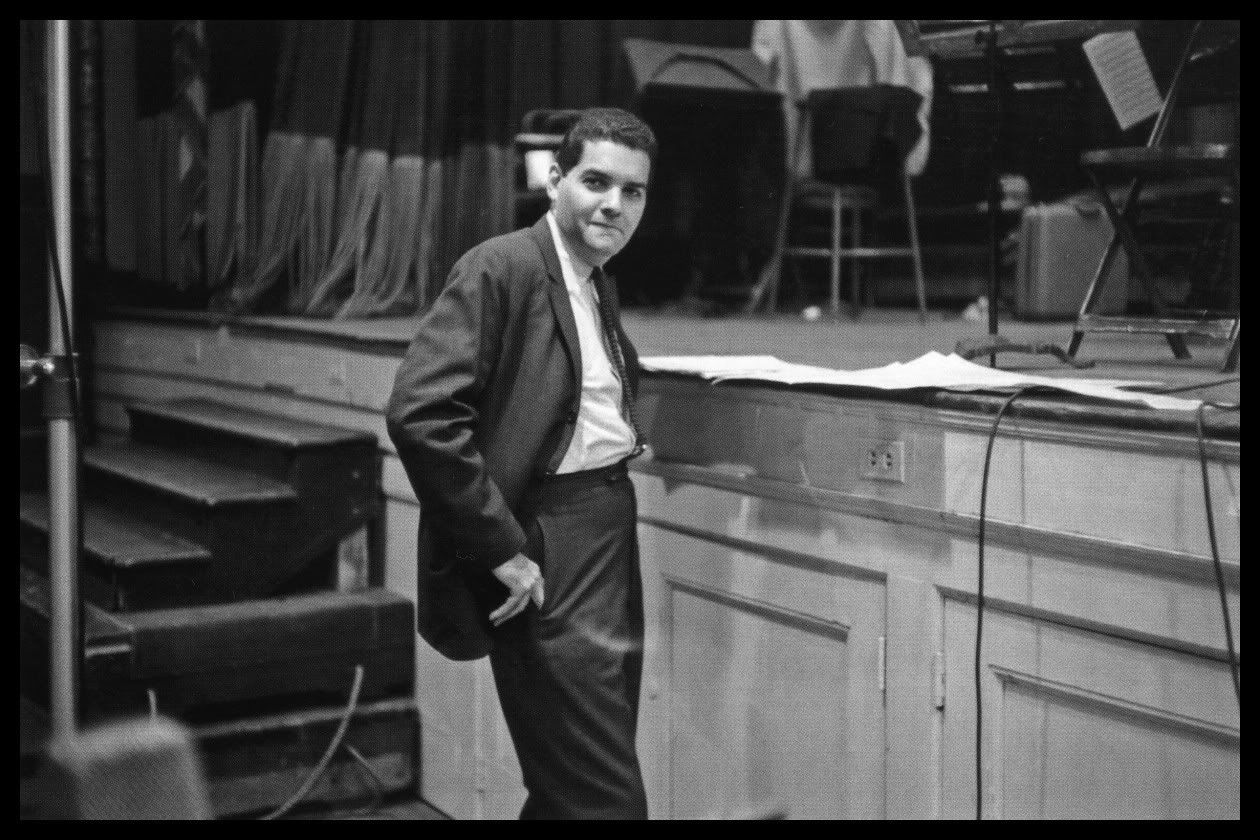 George Russell
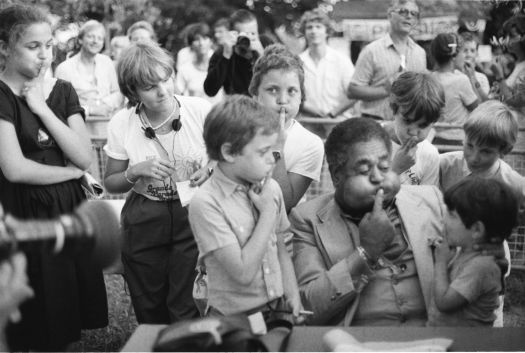 Dizzy Gillespie and friends, jazz festival, Nice, France, c.1981
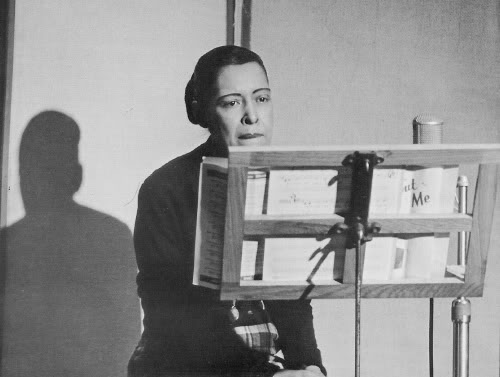 Billie Holiday in her last recording session, in New York, 1959
 Ron Carter
(New York City, 1973)
Ron Carter
(New York City, 1973)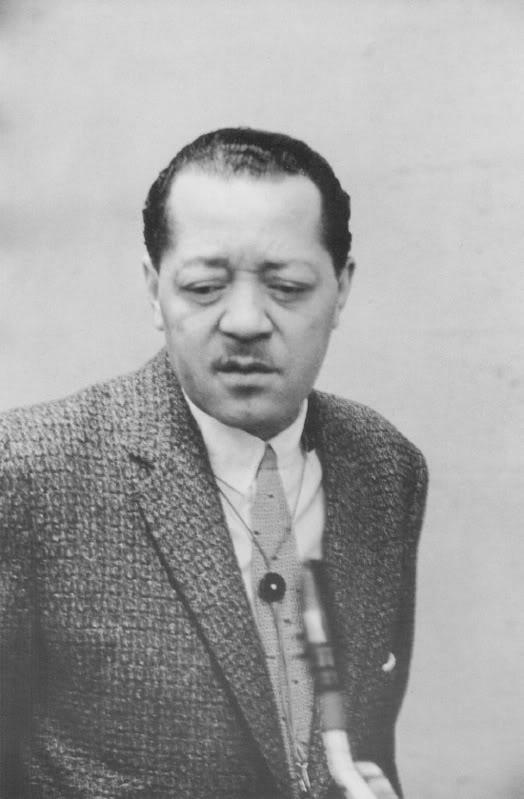 Lester Young in a New York City TV studio circa 1957
 Coleman Hawkins bides his time in a New York City TV studio in 1957
 Dizzy Gillespie dozes (circa 1940)
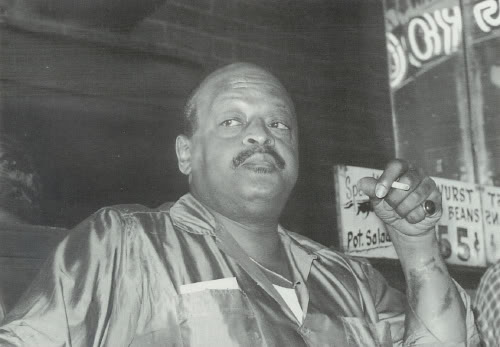 Ben Webster relaxes at Beefsteak Charlie's
 Tyree Glenn & Chu Berry, Fort Bragg, N.C., circa 1940
 Ben Webster, Earle Warren, Lester Young and Gerry Mulligan, New York City TV studio, 1957
 Cozy Cole and friends, outside the Apollo Theatre in 1939
 Cab Calloway in a New York studio circa 1970
 Jonah Jones and Cab's chauffeur Holmes in Little Rock, 1941
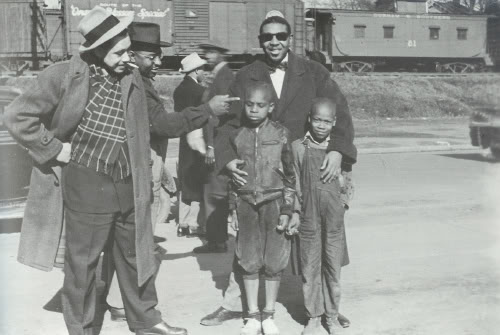 Cab Calloway, Chu Berry and Tyree Glenn have fun with some local kids in Durham, N.C. circa 1940
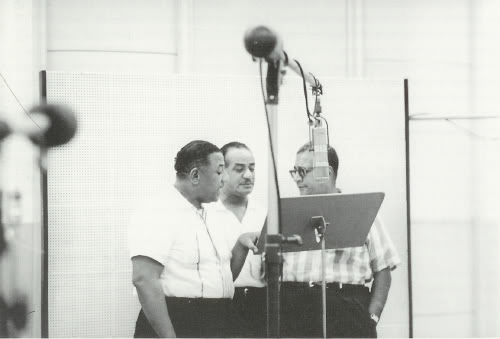 The Mills Brothers
 Johnny Hodges enjoys a cold one at Beefsteak Charlie's in 1960
 Gene Krupa plays in New York City in 1955
 Cab Calloway visits some Florida children in 1938
 Lester Young and Roy Eldridge in Harlem circa 1958
 Mona Hinton, Ike Quebec, Doc Cheatham, Mario Bauza and Shad Collins, on tour in Alabama in 1949
Guest post : Milt Hinton by Geoff Dyer
There are lots of really good books of jazz photos. (Books by Wiliam Claxton, Jimmy Katz, Bob Parent, Herman Leonard, Francis Wolff, etc., are just a few that spring immediately to my mind.) But far and away my favourite of the few I own is Milt Hinton’s “Bass Line “. Bassist Milt Hinton played and recorded with just about everyone, till his death in 2000. He also had a camera with him most of the time and his pictures capture something none of the others could because he was an insider. He shot his friends under casual circumstances, in private or personal moments. He was an amateur (in the best sense of the word) but also a skilled photographer, so he produced a rich treasury, glimpses into the world of jazz of the classic era.
Geoff Dyer wrote an amazing and unusual book of jazz stories in a style he calls “imaginative criticism”. Based on true life stories and photographs of a handful of jazz luminaries, he’s composed tales – part fantasy, part biography – that are meant to convey impressionistic rather than literal truth. Rather than being about jazz, they are jazz, in a way.
Hinton’s photo below, and Dyer’s commentary, which I first came across almost twenty years ago, have had a influence on how I think about photography, jazz, memory, and life.
A Note on Photographs by Geoff Dyer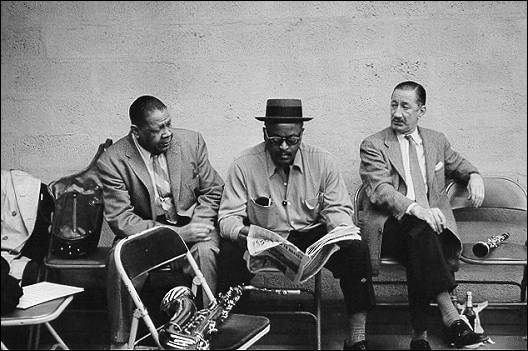
The fact that it is not as you remember it is one of the strengths of Hinton’s photograph (or any other for that matter), for although it depicts only a split-second the felt duration of the picture extends several seconds either side of that frozen moment to include – or so it seems – what has just happened or is about to happen: Ben tilting back his hat and blowing his nose, Red reaching over to take a cigarette from Pee Wee …
Oil paintings leave even the Battles of Britain or Trafalgar strangely silent. Photography, on the other hand, can be as sensitive to sound as it is to light. Good photographs are there to be listened to as well as looked at; the better the photograph the more there is to hear. The best jazz photographs are those saturated in the sound of their subject. In Carol Reiff’s photo of Chet Baker on-stage at Birdland we hear not just the sound of the musicians as they are crowded into the small stage of the frame but the background chat and clinking glasses of the nightclub. Similarly, in Hinton’s photo we hear the sound of Ben turning the pages of the paper, the rustle of cloth as Pee Wee crosses his legs. Had we the means to decipher them, could we not go further still and use photographs like this to hear what was actually being said? Or even, since the best photos seem to extend beyond the moment they depict, what has just been said, what is about to be said . . . Photograph of Red Allen, Ben Webster, and Pee Wee Russell (1957) from Bass Line by Milt Hinton.
Text by Geoff Dyer, from But Beautiful , 1991. _____
Additional information and a current listing of shows can be found at www.MiltHinton.com




 Mensagens