quarta-feira, 14 de setembro de 2011

Jo Jones and Milt Hinton – Percussions and Bass 1960


Jo Jones perc. & Milt Hinton bass

1. Tam 2:02

2. Me And You 2:25

3. Coffee Dan 2:52

4. The Love Nest 4:34

5. H.O.T. (Helen Of Troy) 3:13
6. Shoes On The Ruffs 2:52

7. The Walls Fall 2:35

8. Blue Skies 2:33

9. Late In The Evening 2:21

10. Ocho Puertas 2:55
11. Tin Top Alley Blues 3:01

12. Little Honey 2:34

1960

MP3@320

Jo Jones and Milt Hinton were two musicians who could raise the level of playing in any rhythm section they were a part of this historical curiosity, originally recorded for Everest, featues just the two of them exploring the rhythmic possibilities within a dozen numbers. Jones’ brushwork is matchless as usual, while Hinton’s considerable technique is also apparent. The highlight of this rather brief date is “The Walls Fall,” a fascinating reworking of the old spiritual “Joshua Fit the Battle of Jericho.” While the playing time is brief at just 34 minutes, it’s great to hear two masters at work.

Thanks to Raz - Jazz Is My Life :-)

terça-feira, 6 de setembro de 2011

Buster Williams - Crystal Reflections 1976


Muse LP, 1976

1. prism
2. the enchanted flower
3. i love you
4. i dream too much
5. vibrations
6. my funny valentine

Personnel:
Buster Williams (synthesizer, bass); Suzanne Klewan (vocals); Roy Ayers (vibraphone, Arp string ensemble);
Kenny Barron (acoustic & electric pianos); Jimmy Rowles (acoustic piano); Billy Hart (drums); Nobu Urushiyama (percussion)

Recorded at Generation Sound Studios, New York, New York on August 30, 1976.

sábado, 13 de agosto de 2011

Ron Carter - Uptown Conversation 1969


Recorded at A & R Recording Studios, New York on Oct 6 & 7, 1969.

Ron Carter (bass); Hubert Laws (flute); Herbie Hancock (piano); Billy Cobham, Grady Tate (drums).

1. Uptown Conversation
2. Ten Strings
3. Half A Row
4. R.J.
5. Little Waltz
6. Einbahnstrasse
7. Doom
8. Einbahnstrasse (alt. tk.)
9. Doom (alt. tk.)

mediafire

quarta-feira, 10 de agosto de 2011

Douglas Watkins

(March 2, 1934 – February 5, 1962)

Influential Jazz bassist, while he lived only to the age of 27, Doug Watkins appeared on well over 350 LP's and released only two albums as leader.
Watkins died in an automobile accident on February 5, 1962, while traveling from Arizona to San Francisco to meet drummer Philly Joe Jones for a gig. He fell asleep at the wheel and was hit head-on by an oncoming truck. The other occupants of the car, pianist Sir Roland Hanna and trumpeter Bill Hardman, survived the crash.

1956 : Watkins at Large
▪ 1960 : Soulnik

Doug Watkins - Watkins At Large (1956)


Personnel:

Doug Watkins - bass
Donald Byrd - trumpet
Duke Jordan - piano
Art Taylor - drums
Hank Mobley - tenor sax (1-4)
Kenny Burrell - guitar (1-4)

Track Listings
1. Return to Paradise (Dimitri Tiomkin)
2. Phinupi (Kenny Burrell)
3. Phil T. McNasty's Blues
4. More of the Same (Thad Jones)
5. Panonica (Duke Jordan)

Recorded: Dec. 8, 1956

mediafire

Thanks to Freedom Records

segunda-feira, 8 de agosto de 2011

Eddie Costa & Vinnie Burke 1956


Personnel

Eddie Costa - piano & vibraphone Vinnie Burke - bass Nick Stabulas - drums

Tracks
1. Fascinating Rhythm (Gershwin, Gershwin) 2:57
2. Unison Blues (Burke) 5:23
3. Sweet and Lovely (Arnheim, Daniels, Tobias) 3:17
4. Let's Do It (Let's Fall in Love) (Porter) 4:21
5. Yesterdays (Kern, Harbach) 3:46
6. Pile Driver (Costa) 5:08
7. It Could Happen to You (Burke, VanHeusen) 6:38
8. Get Happy (Arlen, Koehler) 4:13
9. Jeepers Creepers (Warre, Mercer) 2:32

Recorded in New York City ; September 29, 1956

FLAC Link

PW : melanchthon

Thanks to Melanchthon

A spare and sweet little set from the team of Eddie Costa and Vinnie Burke – one of the best of the east coast chamber jazz groups of the mid 50s! The pair's trio has Eddie on piano and vibes, Vinnie on bass, and Nick Stabulas on drums – all working together to craft light, rhythmic versions of tunes that really change them up rhythmically – working in the most playful mode of the time to freely create over the top of familiar numbers that include "Fascinating Rhythm", "It Could Happen To You", "Sweet & Lovely", "Yesterdays", and "Let's Do It". The set also features two nice originals – "Unison Blues" and "Pile Driver".
© 1996-2011, Dusty Groove America, Inc.

domingo, 7 de agosto de 2011

The Vinnie Burke All Stars 1956

cover photo by Alan Fountaine, LP10
ABC-Paramount ABC 139


Vinnie Burke (bs) Urbie Green (tb) Al Cohn (ts) Jimmy Raney (g) Joe Puma (g) Eddie Costa (p) Joe Morello (ds)

Side One
I'm Getting Sentimental Over You
Vin-Tin--Tin
Lulu's Back In Town
You Don't Know What Love Is

Side Two
Unison Blues
Jordu
Blue Jeans
Strike Up The Band

Link

Thanks to lafaro

domingo, 31 de julho de 2011

Vinnie Burke / East Coast Jazz 2 - 1954

Vinnie Burke Quartet East Coast Jazz Series 2 - Bethlehem BCP-1010 DG 10"

Vinnie Burke (bs) Ronny Odrich (cl) Don Burns (acc) Joe Cinderella (g)

Side One
For All We Know
Continental
Yesterdays
Time Out

Side Two
Softly As In The Morning Sunrise
Honeysuckle Rose
Imagination
On The Alamo

Link

Thanks to lafaro

segunda-feira, 25 de julho de 2011

Dannie Richmond Quartet - Ode To Mingus, 1979

Dannie Richmond Quartet - Ode To Mingus, 1979 (Free Jazz)

1. Ode to Mingus 18:19
2. Olduvai Gorge 2:46
3. Love Bird 9:11
4. If You Could See Me Now 3:11
5. Drum Some, Some Drum 7:47

Bill Saxton - Sax (Tenor) Danny Mixon - Piano Mike Richmond - Bass Dannie Richmond - Drums, Vocals

download @ megaupload - Scans
or
download @ narod.ru - Scans

AMG:
"Recorded 11 months after Charles Mingus' death, this set from the bassist's longtime drummer Dannie Richmond is his first of two tributes to Mingus; it would be followed by a Timeless set nine months later. Richmond teams up with three members of Mingus Dynasty (with whom he was touring Europe): tenor saxophonist Bill Saxton, pianist Danny Mixon and bassist Mike Richmond. Despite their fine playing on the record, Saxton and Mixon have both remained fairly obscure. Surprisingly, the quartet does not actually play any Mingus tunes, instead performing 'If You Could See Me Now' (which Richmond sings) and four of the drummer's originals, including 'Love Bird' and the 18-minute 'Ode to Mingus.' Throughout the date, Richmond's drumming (which is showcased on the brief solo piece 'Olduval Gorge') is heard in prime form."

Thanks to barin99

Ray Brown Trio Live At The Concord Jazz Festival 1979

Recorded live at The Concord Jazz Festival on August, 1979

Ray Brown bass Monty Alexander piano Ernestine Anderson vocals Jeff Hamilton drums

01. Introductory Announcement 0:18
02. Blue Bossa (Dorham) 4:55
03. Bossa Nova do Marilla (Evans) 4:17
04. Manha de Carnaval (Bonfa, Maria) 6:47
05. St. Louis Blues (Handy) 4:45
06. Introductory Announcement 0:07
07. Fly Me to the Moon (Howard) 4:01
08. Georgia on My Mind (Carmichael, Gorrell) 6:13
09. Here's That Rainy Day (Burke, VanHeusen) 5:22
10. Please Send Me Someone to Love (Mayfield) 5:52
11. Honeysuckle Rose (Razaf, Waller) 5:51
12. Concluding Announcement 0:19

rapidshare 1 - 2

Thanks to brownweb

sábado, 23 de julho de 2011

Arild Andersen - Hyperborean 1997

01. Patch Of Light I
02. Hyperborean
03. Patch Of Light II
04. Duke Vinaccia
05. Infinite Distance
06. Vanishing Waltz
07. The Island
08. Invisible Sideman
09. Rambler
10. Dragon Dance
11. Stillness
12. Too Late For A Picture

Recorded at Rainbow Studios, Oslo, Norway in December, 1996.

Arild Andersen (acoustic bass) Tore Brunborg (soprano & tenor saxophones) Bendik Hofseth (tenor saxophone) Odd Hannisdal, Henrik Hannisdal (violin) Marek Konstantynowicz (viola) Morten Hannisdal (cello) Kenneth Knudsen (keyboards) Paolo Vinaccia (drums, percussion).

Link

Arild Andersen's Hyperborean is based on an Ancient Greek legend: according to the myth, the Hyperboreans lived beyond the north winds, where the sun god Apollo presided. Andersen has created an impressive song cycle that draws from contemporary instrumental, European jazz, jazz-rock and the distinctive ECM production sound. Andersen's playing is typically tasteful and the compositions are unpredictable and evocative, making Hyperborean another worthy addition to his catalog.
(Stephen Thomas Erlewine ~ All Music Guide)

quinta-feira, 14 de julho de 2011

Paul Chambers & Tommy Flanagan · Motor City Scene 1959-60


Collected recordings of two excellent hard bop units consisting of musicians solely from Detroit, the first led by Thad Jones and Billy Mitchell and the second by Donald Byrd and Pepper Adams that not only stand out as two of the rarest of the Bethlehem jazz recordings, but which are also two of the best records made by the teams of these venerable Detroiters. Lone Hill Jazz chose to market this CD under the names of Flanagan and Chambers which were present on both sessions. Both combos groove very nicely here and who dares not to in the presence of hard bop royalty such as Kenny Burrell, Thad Jones, Al Grey, Pepper Adams, Donald Byrd, Tommy Flanagan, Paul Chambers, "Hey" Lewis (a Louis Hayes alias) and Elvin Jones. The bands are very tight and the tracks are long enough that everybody gets in some good licks on the solos. 9 numbers in all. Originally released as Motor City Scene (#1-4) and Stardust (#5-9) on the Bethlehem label this CD puts the 2 sessions together for the first time. Way harder than most of the west coast sessions on Bethlehem, and two essential hard bop classics that's nigh on impossible to find on wax.

Motor City Scene Complete Recordings

1-4 (Motor City Scene)
Thad Jones (cnt, flhrn), Al Gery (tb), Billy Mitchell (ts), Tommy Flanagan (p), Paul Chambers (b), Elvin Jones (d)
New York October 24 & 32, 1959

5-9 (Stardust)
Donald Byrd (tp), Pepper Adams (bar), Tommy Flanagan (p), Kenny Burrell (g), Paul Chambers (b), Louis Hayes (d)
New York, 1960

1. Let's Play One
2. Minor on Top
3. Like Old Times
4. No Refill

5. Stardust
6. Trio
7. Philson
8. Libeccio
9. Bitty Ditty
MP3 HQ · 133 Mb
download at mediafire

Thanks to expanium

terça-feira, 14 de junho de 2011

Charlie Haden & Kenny Barron - Night & The City (1998)

Lossless (FLAC tracks) | mp3 CBR 320 | Size: 281 / 185 MB

Charlie Haden - double bass & Kenny Barron - piano

1. Twilight Song . 12:47

2. For Heaven’s Shake . 10:46
3. Spring Is Here . 10:20

4. Body And Soul . 10:25

5. You Don’t Know How I Love Is . 6:59
6. Waltz for Ruth . 8:27
7. The Very Thought Of You . 11:01

DOWNLOAD
flac from : 
Turbobit | 
Fileserve | 
Filesonic
mp3 from : 
Turbobit | 
Fileserve | 
Filesonic


The third in a series of Charlie Haden duet projects for Verve in the 1990s finds the increasingly nostalgia-minded bass player working New York City’s Iridium jazz club with pianist Kenny Barron. Moreover, it is entirely possible that we are getting a skewed view of the gig; according to Haden, he and his co-producer wife Ruth tilted this album heavily in the direction of romantic ballads, eliminating the bebop and avant-garde numbers that the two may have also played at the club. Be that as it may, this is still a thoughtful, intensely musical, sometimes haunting set of performances, with Barron displaying a high level of lyrical sensitivity and Haden applying his massive tone sparingly. Most of the seven tracks are fantasias on well-known standards, although one of the most eloquent performances on the disc is Barron’s playing on his own “Twilight Song.” If Haden deliberately set out to create a single reflective mood, he certainly succeeded, although those coming to Haden for the first time through this and most of his other ‘90s CDs would never suspect that this man once played such a fire-breathing role in the jazz avant-garde. ~ Richard S. Ginell

sábado, 11 de junho de 2011

Richard Davis | Now's The Time 1972


Richard Davis - bassClifford Jordan - tenor saxophoneMarvin "Hannibal" Peterson - trumpetJoe Bonner - pianoFreddie Waits - drums


01. Epistrophy (Thelonious Monk, Kenny Clarke) - 22:56

02. Now's The Time (Charlie Parker) - 22:31

03. Highest Mountain (Clifford Jordan) - 17:31


Recorded live at Jazz City, NYC, September 7, 1972


mp3 320 kbps + full scans
megaupload part1 | part2
rapidshare part1 | part2

PASSWORD (IF REQUIRED) : fucksarko

quarta-feira, 8 de junho de 2011

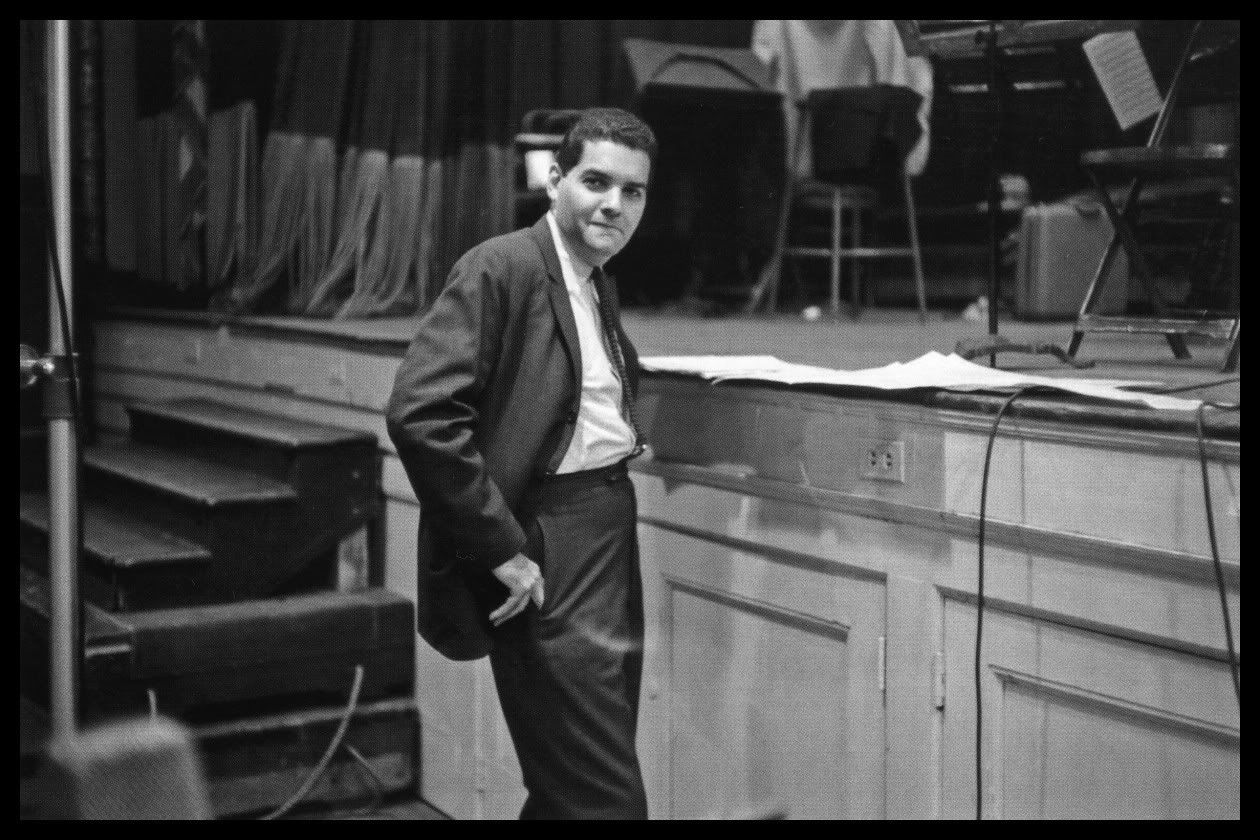
The Friends of Milt Hinton

The Photography of Milt Hinton
Photo copyright Robert Appleton

mh-313a.jpg
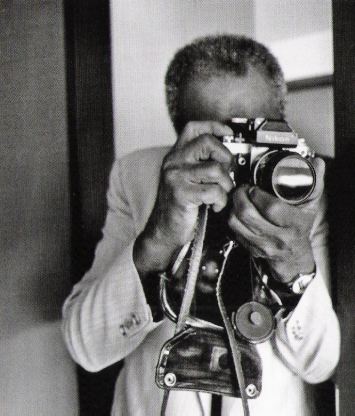
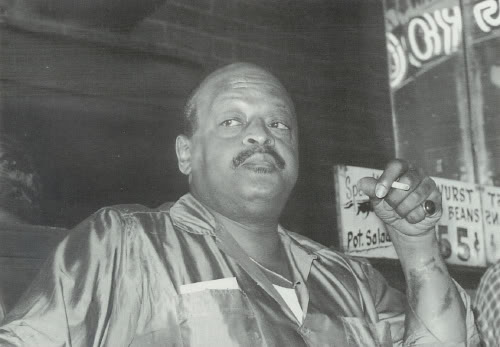
Milt Hinton, Hartford, Connecticut, 1990
_____


The black-and-white photographs taken by Milt Hinton between 1935 and 1999 comprise the major part of the Milton J. Hinton Photographic Collection, which is housed in New York City. The collection, co-directed by David G. Berger and Holly Maxson, contains approximately sixty thousand 35 mm negatives, thousands of reference and exhibition-quality prints, and photographs given to collected by Milt throughout his life.
Photographs from the collection have appeared in books, periodicals, newpapers, jazz calendars, postcards, CD art, films, in videos, and on the Internet.
The collection has curated exhibition at venues ranging from neighborhood community centers to museums, including the Corcoran Gallery of Art, the Denver Art Museum, and the Smithsonian Institution.
Until Milt's death in 2000, the management of the collection -- selecting negatives for reference and exhibition prints, monitoring print quality, and choosing exhibition sites -- involved a close collaborative effort between Milt, David, and Holly. In their continuing administration of the collection, David and Holly are always mindful of Milt's point of view as a documentarian, his aesthetic, and his "voice."
Milt was never a professional photographer, and he readily acknowledged that many of his pictures are of dubious quality. He rarely used a flash in low-light situations, and to be less obtrusive, he often preset the camera's focus so he could literally shoot from the hip. Many rolls of film remained undeveloped for twenty years, and because Milt was seldom in the darkroom, at times he inadvertently used stale chemicals to process his film. Negatives remained paper-clipped to contact sheets for years, which resulted in rust problems, and several basement floods caused many to adhere to one another and to their paper sleeves.
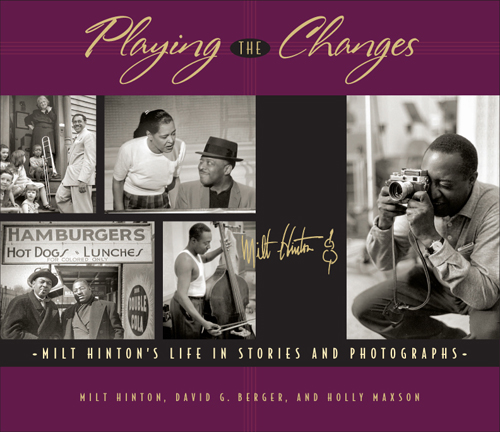
A current and major goal of the collection is to complete a database of Milt's photographs. This on-going project, begun in the late 1990s, in recent years has benefited from advances in digital photography. Scanning has become faster and more accurate, and digital storage is less expensive. Computer software allows a trained user to restore a damaged negative or print and to retrieve elusive details from poor-quality images while maintaining the integrity of the photographs. The success of digital processing is clearly visible in the 2002 Berger and Maxson documentary film, Keeping Time: The Life, Music & Photographs of Milt Hinton, and in some of the photographs that appear in their book Playing the Changes: Milt Hinton's Life in Stories and Photographs as well.

- From Playing the Changes: Milt Hinton's Life in Stories and Photographs, by Milt Hinton, David G. Berger, and Holly Maxson


Blog (Milt Hinton,book cover).png

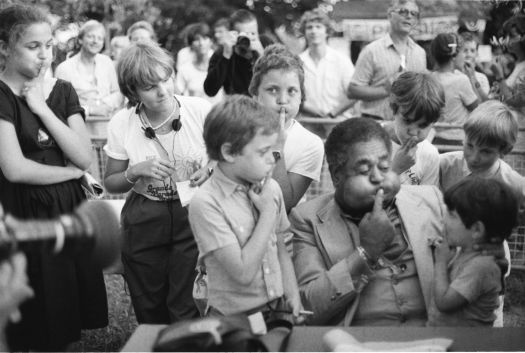
DizMingusNewport71.jpg
Dizzy Gillespie and Charles Mingus backstage at the Newport Jazz Festival 1971
15305.jpg
Quincy Jones, recording studio, NYC c. 1957.jpg
Quincy Jones, recording studio, NYC c. 1957
Jimmy Rushing por Milt Hinton.jpg
Jimmy Rushing
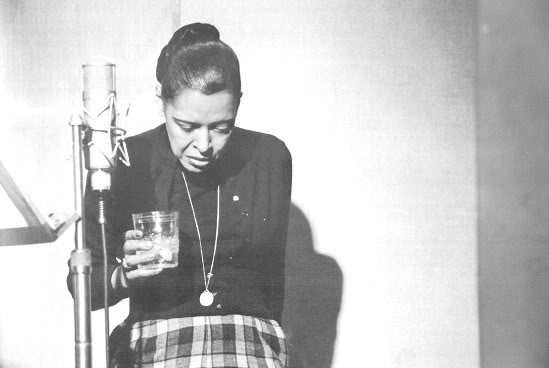
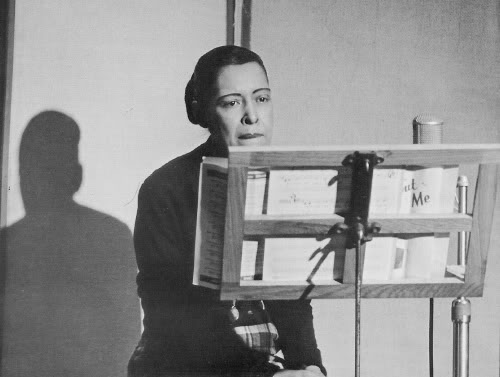
Billie1958.jpg
Billie Holiday 
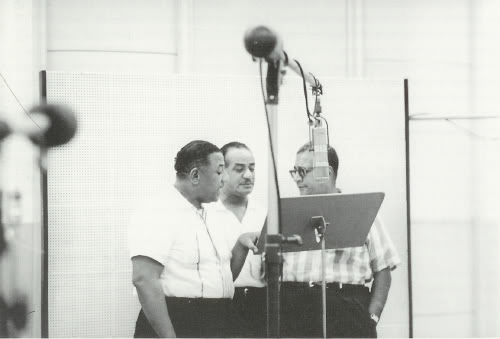
Recording studio, New York City, circa 1958
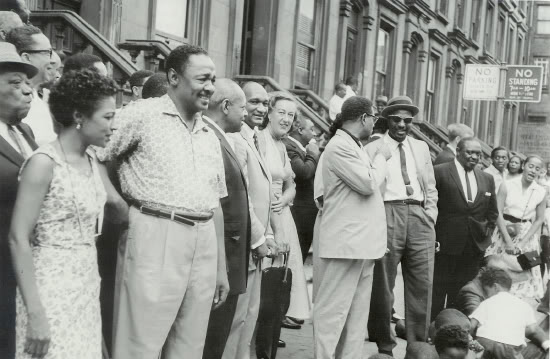
Harlem.jpg
Jimmy Rushing, Scoville Browne, Maxine Sullivan, Joe Thomas, Coleman Hawkins, Oscar Pettiford, Marian McPartland, Emmett Berry, Sahib Shihab, Thelonious Monk and Rex Stewart

(Harlem; August, 1958)

George Russell by Milt Hinton.jpg
George Russell
Dizzy Gillespie and friends, jazz festival, Nice, France, c.1981 photo by Milt Hinton, (The Milton J. Hinton Photographic Collection).jpg
Dizzy Gillespie and friends, jazz festival, Nice, France, c.1981
BillieHolliday.jpg
Billie Holiday in her last recording session, in New York, 1959
RonCarter.jpg
Ron Carter 
(New York City, 1973)
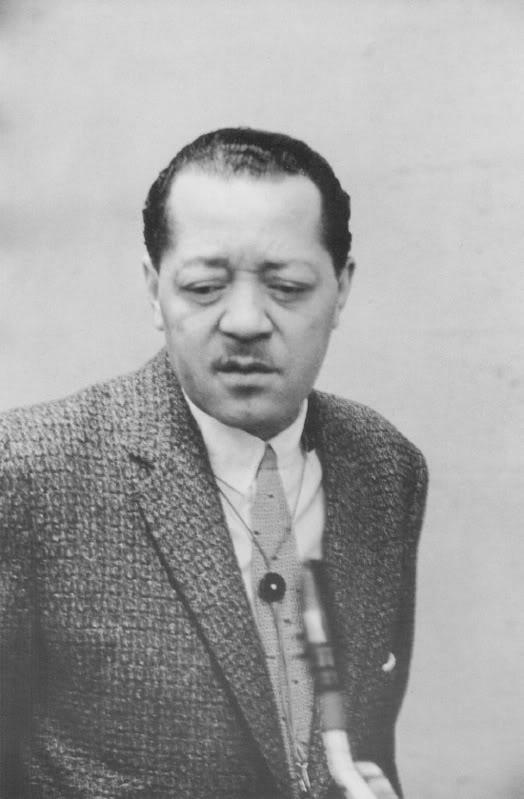
LesterYoung.jpg
Lester Young in a New York City TV studio circa 1957
ColemanHawkins.jpg
Coleman Hawkins bides his time in a New York City TV studio in 1957
DizzyDoses.jpg
Dizzy Gillespie dozes (circa 1940)
BenWebster.jpg
Ben Webster relaxes at Beefsteak Charlie's
TyreeChu.jpg
Tyree Glenn & Chu Berry, Fort Bragg, N.C., circa 1940
WebsterYoungMulligan.jpg
Ben Webster, Earle Warren, Lester Young and Gerry Mulligan, New York City TV studio, 1957
cozycoleapollo1939.jpg
Cozy Cole and friends, outside the Apollo Theatre in 1939
Cab3.jpg
Cab Calloway in a New York studio circa 1970
JonesHolmes.jpg
Jonah Jones and Cab's chauffeur Holmes in Little Rock, 1941
CabChu.jpg
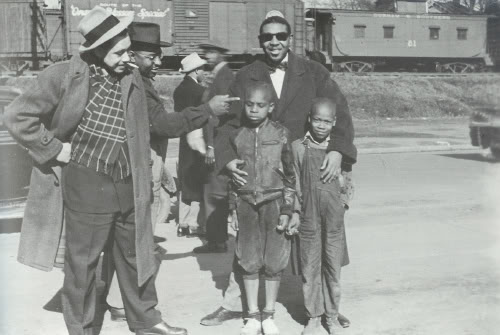
Cab Calloway, Chu Berry and Tyree Glenn have fun with some local kids in Durham, N.C. circa 1940
millsbros.jpg
The Mills Brothers
hodges.jpg
Johnny Hodges enjoys a cold one at Beefsteak Charlie's in 1960
GeneKrupa.jpg
Gene Krupa plays in New York City in 1955
Cab1.jpg
Cab Calloway visits some Florida children in 1938
YoungEldridge.jpg
Lester Young and Roy Eldridge in Harlem circa 1958
MonaHintonIkeQuebecDocCheathamMario.jpg
Mona Hinton, Ike Quebec, Doc Cheatham, Mario Bauza and Shad Collins, on tour in Alabama in 1949
Bass Line signed Newman dj.jpg

Guest post : Milt Hinton by Geoff Dyer
There are lots of really good books of jazz photos. (Books by Wiliam Claxton, Jimmy Katz, Bob Parent, Herman Leonard, Francis Wolff, etc., are just a few that spring immediately to my mind.) But far and away my favourite of the few I own is Milt Hinton’s “Bass Line “. Bassist Milt Hinton played and recorded with just about everyone, till his death in 2000. He also had a camera with him most of the time and his pictures capture something none of the others could because he was an insider. He shot his friends under casual circumstances, in private or personal moments. He was an amateur (in the best sense of the word) but also a skilled photographer, so he produced a rich treasury, glimpses into the world of jazz of the classic era.
Geoff Dyer wrote an amazing and unusual book of jazz stories in a style he calls “imaginative criticism”. Based on true life stories and photographs of a handful of jazz luminaries, he’s composed tales – part fantasy, part biography – that are meant to convey impressionistic rather than literal truth. Rather than being about jazz, they are jazz, in a way.
Hinton’s photo below, and Dyer’s commentary, which I first came across almost twenty years ago, have had a influence on how I think about photography, jazz, memory, and life.

A Note on Photographs by Geoff Dyer

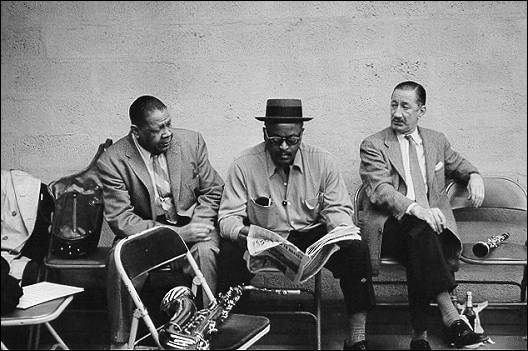
Photograph of Red Allen, Ben Webster, and Pee Wee Russell (1957)  from Bass Line by Milt Hinton.jpg

PHOTOGRAPHS SOMETIMES WORK on you strangely and simply: at first glance you see things you subsequently discover are not there. Or rather, when you look again you notice things you initially didn’t realise were there. In Milt Hinton’s photograph of Ben Webster, Red Allen and Pee Wee Russell, for example, I thought that Allen’s foot was resting on the chair in front of him, that Russell was actually drawing on his cigarette, that …
The fact that it is not as you remember it is one of the strengths of Hinton’s photograph (or any other for that matter), for although it depicts only a split-second the felt duration of the picture extends several seconds either side of that frozen moment to include – or so it seems – what has just happened or is about to happen: Ben tilting back his hat and blowing his nose, Red reaching over to take a cigarette from Pee Wee …
Oil paintings leave even the Battles of Britain or Trafalgar strangely silent. Photography, on the other hand, can be as sensitive to sound as it is to light. Good photographs are there to be listened to as well as looked at; the better the photograph the more there is to hear. The best jazz photographs are those saturated in the sound of their subject. In Carol Reiff’s photo of Chet Baker on-stage at Birdland we hear not just the sound of the musicians as they are crowded into the small stage of the frame but the background chat and clinking glasses of the nightclub. Similarly, in Hinton’s photo we hear the sound of Ben turning the pages of the paper, the rustle of cloth as Pee Wee crosses his legs. Had we the means to decipher them, could we not go further still and use photographs like this to hear what was actually being said? Or even, since the best photos seem to extend beyond the moment they depict, what has just been said, what is about to be said . . .


Photograph of Red Allen, Ben Webster, and Pee Wee Russell (1957) from Bass Line by Milt Hinton.
Text by Geoff Dyer, from But Beautiful , 1991.

_____


 Additional information and a current listing of shows can be found at www.MiltHinton.com